⚙ Introduction
In today’s digital world, reliable network connectivity is the backbone of every business, organization, and even home environment. From internet access to security systems like CCTV, everything depends on a properly installed and maintained network.
Behind every stable network is a set of essential networking tools. These hardware tools are used for installation, maintenance, testing, and troubleshooting of network systems. Whether you are working with Ethernet cables, telephone lines, or fiber optic infrastructure, having the right tools ensures accuracy, efficiency, and long-term reliability.
For IT technicians and network engineers in Ethiopia—especially in growing cities like Bahir Dar—understanding and using these tools is a critical skill.
In this guide, you’ll learn:
- The most important networking tools and their uses
- Why each tool matters in real-world installations
- Practical insights for IT professionals and beginners
👉 ይህ መመሪያ ለ IT ባለሙያዎች እና ለጀማሪዎች ጠቃሚ ነው።
📌Why Networking Tools Are Important
Networking tools are not just accessories—they are essential for building reliable systems.
1. Accurate Installation
Using the right tools ensures cables and devices are installed correctly the first time.
2. Faster Troubleshooting
When network issues occur, proper tools help quickly identify and fix problems.
3. Professional Results
Clean and organized installations improve performance and reduce future failures.
4. Cost Efficiency
Good tools reduce errors, saving both time and money.
👉 In Ethiopia, where technical resources may be limited, having the right tools gives you a strong advantage.
⏭ Watch the full video below 👇
👉 Watch the video above to see essential networking tools in action and understand how each tool is used in real-world installations.
🚀 Essential Networking Tools and Their Uses
Let’s explore the most important hardware tools every networking professional should know:
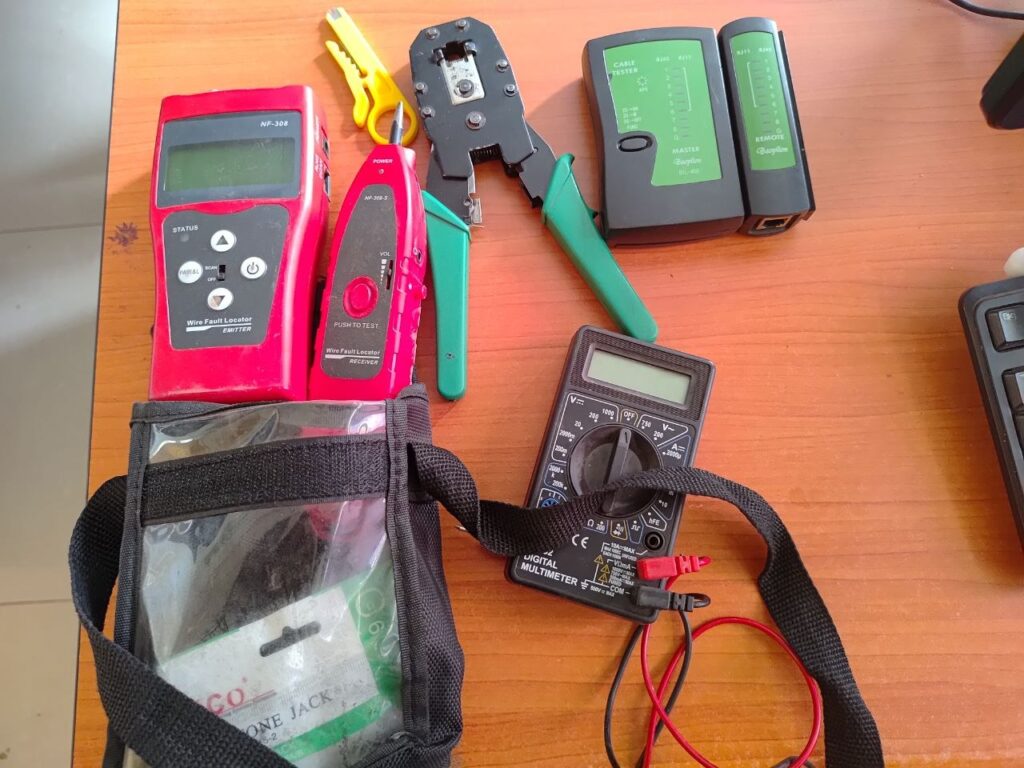
1. Cable Crimper
A cable crimper is one of the most commonly used tools in networking.
Purpose:
- Attaches connectors like RJ45 (Ethernet) or RJ11 (telephone) to cables
Why It Matters:
Without proper crimping, network cables won’t transmit data correctly.
Common Use:
- Creating Ethernet cables for routers, switches, and PCs
👉 A good crimp ensures a stable and long-lasting connection.
2. Punch-Down Tool
This tool is essential for structured cabling systems.
Purpose:
- Inserts wires into patch panels, keystone jacks, and wall sockets
- Cuts excess wire automatically
Why It Matters:
Ensures secure and clean connections in network installations.
Common Use:
- Office and building network setups
3. Cable Stripper
A cable stripper is used during cable preparation.
Purpose:
- Removes the outer insulation of cables without damaging internal wires
Why It Matters:
Damaging internal wires can lead to poor connectivity or signal loss.
Common Use:
- Preparing Ethernet, coaxial, and fiber cables
4. Cable Tester
A cable tester is a must-have tool for any network technician.
Purpose:
- Checks if a cable is properly wired and functional
Detects:
- Open circuits
- Short circuits
- Incorrect wiring
Why It Matters:
Prevents installation errors and ensures network reliability.
👉 Always test cables before final installation.
5. Multimeter
A multimeter is a versatile electrical testing tool.
Purpose:
- Measures voltage, current, and resistance
Why It Matters:
Helps diagnose power issues in networking equipment.
Common Use:
- Checking power adapters, cables, and electrical faults
6. Tone Generator and Probe
This tool is extremely useful in large installations.
Purpose:
- Identifies and traces cables within walls or bundles
How It Works:
- The generator sends a signal
- The probe detects the signal
Why It Matters:
Saves time when dealing with complex cable networks.
7. TDR (Time Domain Reflectometer)
A TDR is used for advanced cable testing.
Purpose:
- Detects faults in copper cables
What It Measures:
- Cable length
- Breaks or cuts
- Signal reflections
Why It Matters:
Provides precise fault location, reducing troubleshooting time.
8. OTDR (Optical Time Domain Reflectometer)
An OTDR is used in fiber optic networks.
Purpose:
- Measures signal loss and detects faults in fiber cables
Why It Matters:
Fiber networks require high precision—OTDR ensures performance.
Common Use:
- ISP networks
- Large enterprise installations
9. Fiber Cable Cleaver
A fiber cleaver prepares fiber cables for splicing.
Purpose:
- Makes clean, precise cuts on fiber optic cables
Why It Matters:
Poor cuts result in signal loss and weak connections.
10. Fiber Fusion Splicer
A fusion splicer is used for joining fiber cables.
Purpose:
- Uses heat to fuse two fiber cables together
Why It Matters:
Creates a permanent, low-loss connection.
Common Use:
- High-speed internet and telecom infrastructure
11. Butt Set (Telephone Test Set)
This tool is used in telephone line testing.
Purpose:
- Allows technicians to test and monitor telephone lines
Functions:
- Dialing
- Listening
- Checking line quality
Why It Matters:
Essential for telecom troubleshooting.
12. Loopback Adapter
A loopback adapter is used for testing ports.
Purpose:
- Sends signals back to the device
Why It Matters:
Confirms whether a network port is working correctly.
Common Use:
- Diagnosing routers, switches, and network cards
🩸Real-World Networking in Ethiopia
In Ethiopia, especially in cities like Bahir Dar, networking professionals commonly work on:
- Office network installations
- CCTV system setups
- Internet café networks
- Small business infrastructure
Common Tool Setup:
Most technicians use:
- Cable crimper
- Cable tester
- Punch-down tool
- Basic multimeter
Advanced Tools:
Used mainly by ISPs and large organizations:
- OTDR
- Fusion splicer
👉 Starting with basic tools is enough for most small and medium projects.
☑ Tips for Choosing Networking Tools
To ensure quality and durability:
- ✔ Buy from trusted suppliers
- ✔ Avoid very cheap tools (low quality)
- ✔ Choose multi-purpose tools when possible
- ✔ Maintain and store tools properly
👉 Investing in good tools improves your professional reputation.
❌Common Mistakes to Avoid
Many beginners make these mistakes:
- Using poor-quality tools
- Not testing cables after installation
- Damaging wires during stripping
- Ignoring safety precautions
- Not learning how to use advanced tools properly
👉 Avoiding these mistakes will save time and reduce errors.
🔔 Frequently Asked Questions (FAQ)
1. Which networking tool is most important?
The cable crimper and cable tester are the most essential for beginners.
2. Do I need expensive tools to start?
No. You can start with basic tools and upgrade as your work grows.
3. What is the difference between TDR and OTDR?
- TDR is used for copper cables
- OTDR is used for fiber optic cables
4. Are these tools needed for CCTV installation?
Yes. Many of these tools are used in CCTV and network setups.
✅Conclusion
Understanding and using essential networking tools is a key skill for anyone working in IT support, networking, or telecommunications. From simple tools like cable strippers to advanced devices like OTDRs, each tool plays a critical role in building and maintaining reliable network systems.
For professionals in Ethiopia, mastering these tools not only improves efficiency but also opens doors to more job opportunities and business growth.
👉 በአጠቃላይ፡ መሳሪያ እውቀት የስራ ጥራትን ያሻሽላል።
Need Professional Networking Services?
If you want a reliable and well-structured network, working with professionals is the best choice.
👉 Contact BlueWave Technology for:
Ensure your network is fast, stable, and professionally installed.